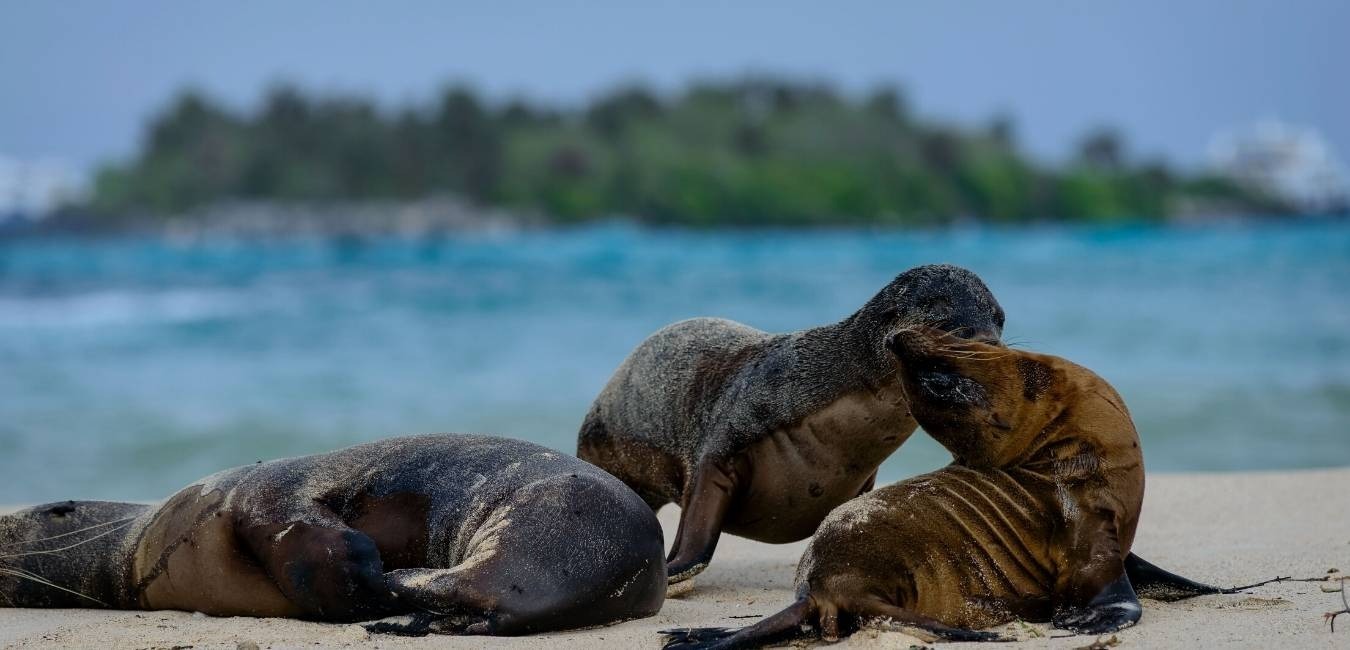
San Cristobal Island

SAN CRISTOBAL

San Cristobal or Chatham the easternmost island of Galapagos is also one of the oldest. Eroded volcanic peaks in the northern part of the island and rich vegetation in the southern portion characterize the island. Puerto Baquerizo Moreno, the principal town is the provincial capital and the second largest settlement area in the islands.

Home to one of the Galapagos Islands' two airports many visitors will begin and end their tour here. With a relatively good infrastructure including hotels, restaurants, buses, taxis and visitor information it is one of the easiest islands for people interested in exploring the islands on their own.

An easy walk from town Frigatebird Hill offers a fantastic vista. San Cristobal's highlands are sprinkled with farms, the island's first settlement El Progresso and El Junco, the only freshwater lake in Galapagos.

Red-footed, blue-footed and masked boobies make their home on the eastern side of the island at Punta Pitt. A two-hour hike down shore from Punta Pitt wild tortoises can be seen at La Galapaguera.

Cruise to spectacular Kicker Rock, or Leon Dormido, the jagged remains of an old tuff cone whose flanks are covered with seabirds.

Puerto Baquerizo Moreno

Puerto Baquerizo Moreno is the provincial capital of the Galapagos and the second largest settlement area in the islands and home to one of the island's two main airports. It originated as a penal colony more than a hundred years ago. Now a sleepy town overlooking the harbor known for its relaxed attitude. The beaches near town are one of the few places where visitors are allowed to camp in the islands, the National Park Information Site located just outside of town is happy to provide information. There are a number of hotels and restaurants available for those interested in staying a few extra days in the area to explore some of the local visitor sites.

Staying on San Cristobal

San Cristobal is the capital of the Galapagos, it has its own airport and several hotels. With several beaches right in town and several very close dive sites, San Cristobal has a very laid-back feel.

If you are staying in San Cristobal, local guides and tours are available in town, the Highlands are one of the few areas within the islands where visitors are not required to travel with a guide. It is possible to do your own exploration either by foot, bicycle or by hiring a taxi in town. Taxi prices are listed on the island map in front of the main dock.

Learn more about Staying on San Cristobal on our Blog.

Interpretation Center

A short walk from Puerto Baquerizo Moreno takes you to the Interpretation Center of San Cristobal. Opened in the late 1990's this site compliments the information found at the Charles Darwin Research Station on Santa Cruz. Visitors to the Interpretation Center can learn about the history of the islands, the formation and development of both the island and species which live here. A section of the center is dedicated the human history of the Galapagos and provides information about famous visitors, early settlers as well as the challenges meeting those people who live in the Galapagos today.

Interpretation Visit Information

Landing: dry landing
Highlights: interpretation of the history of Galapagos
Conditions: can be visited with your tour or on own
Notes: a short walk from town

Frigate Bird Hill

A short hike from Puerto Baquerizo Moreno it is a nice way to spend the afternoon. To reach Frigatebird Hill the trail begins starts just behind the interpretation center. At the end of the road there are two paths one leading through the woods and the along Playa Mann {the beach) and the other up a rocky path. A pleasant journey goes up one way and returns along the other path.

The trip to the Hill takes approximately 20-40 minutes. Once there visitors are treated to a spectacular view of the white beaches on one side and the roofs of Puerto Baquerizo on the other. The hill is often visited by Frigate birds, giving it its name. Both magnificent frigate birds and great frigatebirds can be seen. The birds are not always present, making it is best to ask park officials as to the best times to see the birds when planning your trip.

Frigate Bird Hill Visit Information

Landing: dry landing
Highlights: magnificent and great frigatebirds nesting in same colony
Conditions: the well marked trail can be steep and hot
Notes: bring good walking shoes and water

La Loberia

A short 10 minute bus ride from Puerto Baquerizo is La Loberia. Traveler's frequently not the unusual color of the plants as they near the beach. La Loberia home to a large Galapagos sea lion colony and nursery. There are frequently dozens of sea lions visible at any time. Low tide is one of the best times to visit however, since it is when the mother's bring the pups into the tide pools for swimming lessons. Besides the sea lions, yellow warblers, frigates and several species of Darwin Finches and marine iguanas can be seen.

La Loberia also has interesting flora including button mangrove, white mangrove, chala, palo santo, cotton, tiquilia, morning glory and other species of the littoral zone as the cacho de chivo, whose seeds is the main source of food for several species of finches.

La Loberia Visit Information

Landing: dry landing
Highlights: sea lions and snorkeling
Conditions: coral sand beach and rocky coast
Notes: keep your distance from aggressive male sea lions

HIGHLANDS

San Cristobal's highlands has a number of newer visitor sites that have recently been added to cruise itineraries including a visit to the San Cristobal tortoise preserve and one of the Galapagos's only fresh water lakes. Additional sites in the highlands are frequented by those staying on the island or doing an island hopping tour.

Cerro Colorado - Galapaguera

The drive from Puerto Baquerizo Moreno to Cerro Colorado and the Galapaguera Tortoise Reserve is approximately 45 minutes up over the top of the island. San Cristobal originally had two populations of tortoises, one located in the Northeast consisting of approximately 1,400 tortoises some of which were transferred to the Cerro Colorado Tortoise Preserve. The other group was located on the south of the island in an area adjacent to the current preserve however this group became extinct due to whalers in the past centuries.

The tortoise preserve was built in 2002 this 12 hectare preserve is located in a dry forest and was constructed to preserve the San Cristobal subspecies of Galapagos Tortoise (Geochelone chathensi). The San Cristobal tortoises are seriously threatened by introduced animals (wild goats, rats and cats), which the park has been working to eradicate. The tortoise preserve and captive breeding program was developed to insure the continuation of the subspecies. In 2005 - 2006 the national park announced 11 new tortoises were hatched here.

Galapaguera provides a unique tortoise viewing opportunity. Within the large walled environment are boardwalks and gravel trails winding through the preserve. The tortoises are free to roam throughout the region. As you walk through the vegetation typical of the highlands you will encounter a selection of highland birds including flycatchers, yellow warblers, finches and the endemic Chatham Mockingbird as well as up-close encounters with these gentle giants.

Cerro Colorado Visit Information

Landing: dry landing
Highlights: Galapagos tortoises
Conditions: good trails
Notes: Be careful not to touch or eat manzanillo (Hippomanes mancinella) fruits, a toxic plant predominant in this place.

El Junco Lagoon and San Joaquin Hill

The steep road narrows as it climbs the sides of the extinct volcano. At the summit visitors are treated to a spectacular view of the El Junco Lagoon. Rainwater and condensation have collected in the caldera for hundreds of years creating this haven for frigatebirds. The lake supplies water both for the people of the island and for many of the tourist boats. Hiking around the lake offers views of practically the entire island including San Joaquin Hill the island's highest point.

Traveling to San Joaquin Hill offers visitors a glimpse of the island's many zones and their eco-systems. The summit at nearly 2400 feet (720 m) brings visitors above the tree line.

El Junco Visit Information

Landing: dry landing
Highlights: one of Galapagos only fresh water lake, unique plant life and birding
Conditions: typically cool and muddy
Notes: bring good shoes and a jacket

NORTH COAST OF SAN CRISTOBAL

The north coast of San Cristobal has a number of visitor a dive sites. A boat is required to reach any of these points.

Isla Lobos

Heading up the coast from Wreck Bay and Puerto Baquerizo, you will see Isla Lobos across a small channel off the coast of San Cristobal. The basalt island outcropping lives up to its name of "sea lion island" with a noisy population of frolicking and barking beasts. It is also a nesting place for blue-footed boobies and an excellent spot for snorkeling.

Isla Lobos Visit Information

Landing: dry or wet landing on rocks
Highlights: snorkeling with sea lions nesting frigates and boobies
Conditions: flat sandy trail
Notes: Be careful not to disturb nesting birds.

Kicker Rock

Also known as Leon Dormido these rocks are located of the coast of San Cristobal. It is the remains of a lava cone eroded by the sea, the two vertical rocks rising 500 feet from the ocean form a small channel that is navigable by small boats. This natural monument has become a favorite sight for cruises due to the many tropicbirds, frigates and boobies that fill the surrounding air.

Beneath the sea the nearly crystal waters offer a brilliant show of colorful tropical fish and invertebrates. Due to the sheer vertical pitch of the rock face, landings are not possible however many cruises do spend 45 minutes to an hour allowing you to enjoy the full experience.

Kicker Rock Visit Information

Landing: no landings
Highlights: Marine birds and abundant sea life
Conditions: navigation of large rocks
Notes: navigation between the rocks is no longer permitted.

Playa Ochoa

Located on the north coast of San Cristobal across from Kicker Rock, Playa Ochoa is a popular first or last visit for Galapagos Cruises beginning or ending in San Cristobal. The beach has a large colony of sea lions. Ghosts and hermit crabs are common species in this site visit.

Near the beach is a seasonal lagoon an excellent place for viewing both migratory birds and endemic birds like the Chatham Mockinbird.

Playa Ochoa Visit Information

Landing: wet landing
Highlights: snorkeling and birding
Conditions: open area
Notes: Be careful of male sea lions

Cerro Brujo

Located on the northern coast of San Cristobal beyond Isla Lobos is Cerro Brujo, named for its distinctive shaped mountain that resembles a witches hat. Visitors to Cerro Brujo will find arrive on a beach that is an "open area" where you are free to explore on your own. The beach provides some excellent snorkeling in a tranquil environment. Behind the beach is a lagoon where locals would once collect salt to preserve tortoise meat.

Cerro Brujo Visit Information

Landing: wet landing
Highlights: snorkeling and migratory birds
Conditions: open area
Notes: be careful not to walk on the vegetation

Punta  Pitt

The easternmost point in the Galapagos is one of the most unique. Arriving to a mangrove lined beach. Visitors must first pass by a sea lion colony then continue up a long, dry and somewhat difficult trail to discover the only place in Galapagos where all three types of booby found in Galapagos nest along side both types of Frigagebird.

Punta Pitt Visit Information

Landing: wet landing
Highlights: all three types of booby and both types of friagebirds
Conditions: difficult hot trail
Notes: Parts of the path are difficult to walk on, you have to climb a steep ravine, which can be very slippery and therefore dangerous.

Learn More About San Cristobal

San Cristobal Diving
Top Places to Visit in Galapagos - Tortoise Preserve
San Cristobal Snorkel and Dive Sites
Galapagos Island Based Travel San Cristobal Highlands
Galapagos Island Based Travel Frigatebird Hill and Interpretation Center
Galapagos Bio Diverse Paradise
Galapagos Sea Lion Emergency Appeal
OK Galapagos
Charles Darwin in Galapagos
Darwin Animal Doctors
Galapagos Goes Wireless
Shark Breeding Sites Identified
San Cristobal Goes Green - To Rely on Eco Energy
Best Places to View Tortoises in Galapagos
Getting to the Galapagos Islands Planning Your Galapagos Islands Trip

Galapagos BlogGalapagos Blog


GALAPAGOS ISLANDS

Baltra
Bartolome
Daphne
Espanola
Fernandina
Floreana
Isabela
Mosquera
North Seymour
Plazas
Rabida
San Cristobal
Santa Cruz
Santa Fe
Santiago
Sombrero Chino
Tower
Past Client Comments

1999-2012 Galapagos Online LLC all rights reserved


Galapagos Online Tours and Cruises providers of Galapagos Tours, Galapagos Cruises, Galapagos Diving
The Best Travel Guide to the Galapagos Islands, Ecuador, and Peru
